When one stock is half your portfolio
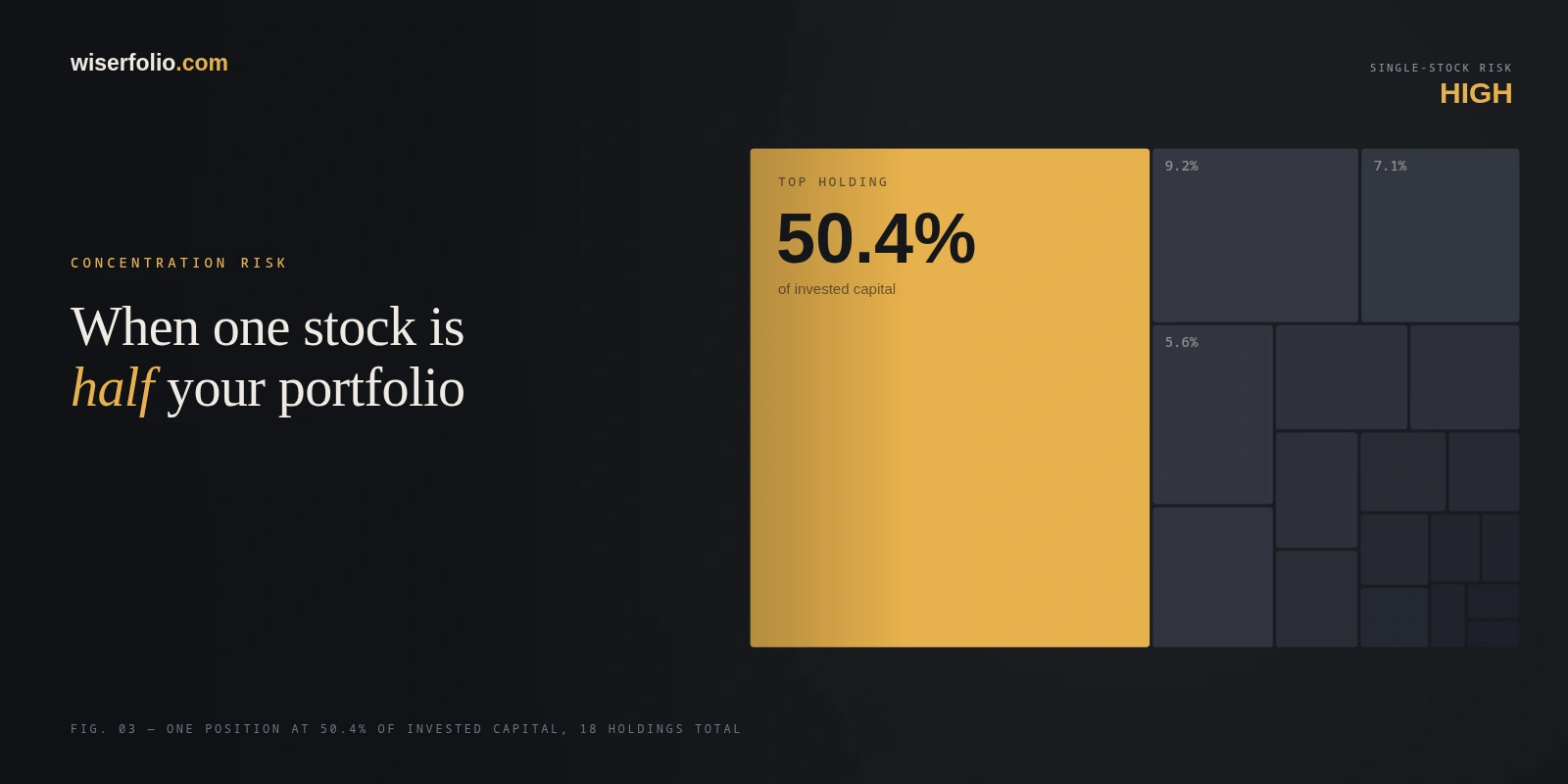
Maybe you got company stock through an ESOP. Maybe one bet went so well it ballooned. Either way, you wake up one day and a single stock is half your net worth — and that is far more dangerous than it feels.
Concentration risk is the quiet killer of retail portfolios. It rarely feels like a problem on the way up — concentration is exactly what *made* you money. But the same force that amplified your gains will amplify your losses, and a portfolio built on one position is one bad earnings call away from real damage.
What counts as "too concentrated"?
There's no universal line, but useful rules of thumb for an individual investor:
- Any single stock above ~10% of your portfolio deserves attention.
- Above ~20%, that one position now drives your overall returns more than everything else combined.
- Above ~40–50%, you don't really have a portfolio — you have a bet with some sprinkles around it.
The same applies to a single sector. If 70% of your holdings are banks, you're exposed to one rate decision or one regulatory change moving your entire net worth.
The asymmetry that matters: a stock that falls 50% needs to rise 100% just to get you back to even. Concentration makes that math your whole financial life.
Why smart people stay concentrated too long
- The winner's trap. The position is big because it did well, so selling feels like betting against a winner. But past performance is exactly why it's now a risk.
- Tax aversion. Trimming means booking gains and paying tax, so people freeze — and let the risk ride to avoid a tax bill that's far smaller than the potential loss.
- Emotional attachment. Employer stock, an inherited holding, "the stock that made me" — these carry stories that cloud the math.
How to fix concentration without wrecking your taxes
- Trim gradually, not all at once. Reducing a 50% position to 20% over a few financial years lets you spread the capital-gains hit across multiple years' LTCG exemptions.
- Use the ₹1.25 lakh LTCG exemption every year. Long-term equity gains up to ₹1.25 lakh a year are tax-free — a natural, free budget for trimming.
- Redirect, don't just sell. Move the proceeds into genuinely different exposures — other sectors, mid/small-caps, international, debt — so you're rebalancing, not just de-risking into cash.
- Set a rule and automate it. "No single stock above 15%" is a simple policy that takes the emotion out. When a position crosses the line, you trim — no agonising.
The mindset shift
Concentration is how you build wealth — a focused bet that pays off. Diversification is how you keep it. The investors who get hurt are the ones who never make the switch: they stay in build-mode with a position that should have moved to keep-mode years ago.
You don't have to abandon a winner entirely. You just have to make sure that no single holding has the power to undo years of progress in a single quarter.
Concentration is just one of several structural risks worth checking. Our guide on how to read your portfolio like an analyst walks through the rest, and if you hold several funds, see how overlap quietly concentrates you too.
See your own portfolio's hidden risks
Upload your statement and Wiserfolio shows your concentration, fund overlap, fees, and tax moves in 90 seconds.
Analyze my portfolio free →